
.png?width=500&height=500&name=PSYMPL_ICON+SET-04%20(1).png)









Table of contents

.svg)
Financial institutions face a critical turning point where customer expectations have fundamentally shifted. Modern banking customers no longer accept generic experiences or one-size-fits-all products. A robust personalization strategy in finance enables institutions to deliver individualized experiences at scale while maintaining operational efficiency and regulatory compliance.

The gap between what customers expect and what banks deliver continues to widen. Research shows that 53% of consumers expect their financial provider to leverage their data to personalize experiences, yet many institutions struggle to move beyond basic demographic segmentation. Your institution needs a systematic approach that unifies customer data, applies behavioral intelligence, and deploys AI-driven automation across every touchpoint.
This guide walks you through the five essential steps for building a personalization strategy that transforms customer experience without overwhelming your operations. You'll learn how to move from static segmentation to dynamic micro-personalization, empower your advisors with real-time insights, and create consistent omnichannel experiences that build trust and drive growth.
Why Traditional Segmentation No Longer Meets Modern Banking Expectations

Traditional banking segmentation relies heavily on demographic categories like age, income, and geography. This approach produces generic product bundles that fail to capture individual financial behaviors and needs.
Your customers now expect experiences tailored to their specific circumstances. They interact with brands across multiple channels and anticipate relevant recommendations at each touchpoint. Static demographic groups cannot account for the real-time behavioral shifts that define modern customer journeys.
Key limitations of traditional segmentation include:
- Inability to respond to changing customer needs in real time
- Over-reliance on assumptions rather than actual behavior patterns
- Lack of granularity in understanding individual preferences
- Failure to capture contextual signals from digital interactions
- Limited predictive capability for life events and financial milestones
- Demographics tells who are person is, not why they make decisions or the reasons behind their behaviors
The gap between what customers expect and what traditional methods deliver continues to widen. Your competitors who embrace dynamic, behavior-based segmentation gain significant advantages in engagement and retention.
Modern banking requires a shift from product-centric to customer-first strategies. You need systems that analyze transaction patterns, digital behaviors, and contextual signals to create meaningful micro-segments. These approaches enable you to deliver personalized offers at precisely the right moment rather than relying on quarterly batch campaigns.
The financial landscape has fundamentally changed. Your segmentation strategy must evolve beyond basic demographics to remain competitive and meet the heightened expectations of today's banking customers.
The Challenge: Delivering Relevance Without Increasing Operational Complexity

Financial institutions face a fundamental tension when implementing personalization strategies. You need to deliver individualized experiences across multiple touchpoints while managing increasing operational complexity and growing compliance burdens that strain your existing infrastructure.
The core obstacles include:
- Data integration challenges across siloed systems that prevent unified customer views
- Resource constraints that limit your ability to scale manual personalization efforts
- Compliance requirements that demand rigorous oversight of every customer interaction
- Training demands for staff who must adapt to new technologies and workflows
More than 80% of consumers expect personalized experiences, yet two-thirds report receiving inappropriate personalization. This gap reveals a critical problem: your teams struggle to balance relevance with efficiency.
Traditional approaches force you to choose between generic communications that reach everyone but resonate with no one, or highly targeted messages that require excessive manual effort. Neither option scales effectively.
Your operations teams face particular pressure. They must coordinate data from transaction systems, digital channels, and customer service platforms while ensuring every interaction meets regulatory standards. This coordination becomes exponentially harder as you attempt to move from broad segmentation toward dynamic micro-personalization.
The challenge intensifies when you consider timing. Delivering the right message to the right buyer at the right time requires real-time decisioning capabilities that many legacy systems cannot support without significant architectural changes.
How a Scalable Personalization Strategy in Finance Enables Consistent, Compliant, and Human-Centered CX
A scalable personalization strategy allows you to deliver tailored experiences across all customer touchpoints without compromising regulatory requirements or operational efficiency. Fragmented data systems and strict compliance requirements create barriers that prevent most organizations from moving beyond basic personalization, but a well-designed strategy addresses these challenges systematically.
Key enablers of scalable personalization include:
- Unified customer data platforms that consolidate information from multiple systems
- Real-time decisioning engines that trigger personalized actions in milliseconds
- Automated compliance checks embedded within personalization workflows
- Modular AI capabilities that can be deployed across different channels and products
You need to balance automation with human insight to maintain trust and empathy in customer relationships. Financial companies can improve personalization by using dynamic customer profiles that focus on behavior,intent, and motivations rather than demographics alone.
Personalization at scale requires managing customer risk and compliance through integrated systems that place customer needs at the heart of every interaction. Your personalization engine must incorporate privacy-by-design principles and transparent data governance from the start.
The foundation lies in gathering and analyzing customer data effectively, but building a personalization strategy in banking goes beyond simply using a customer's name in marketing communications. You must create systems that adapt to individual needs while maintaining consistency across all channels and adhering to regulatory standards.
Step 1 – Unify Customer Data Across the Banking Ecosystem
Banking personalization requires connecting every data point from transactions, digital interactions, and customer service records into one coherent view. Without this foundation, even sophisticated AI models will operate on incomplete information and deliver inconsistent experiences.
Breaking Down Silos Between Core Systems, CRM, Digital Channels, and Advisor Tools
Your banking infrastructure likely spans multiple systems that rarely communicate effectively. Core banking platforms hold account balances and transaction histories. CRM systems track sales interactions and service requests. Mobile apps capture digital behavior. Advisor tools contain wealth management data and client notes.
These disconnected systems create blind spots that prevent you from understanding your customers completely. When your mortgage team can't see a customer's credit card spending patterns, or your mobile app doesn't know about recent branch visits, you miss opportunities to deliver relevant offers.
Modern data integration approaches use ETL pipelines with real-time APIs to connect these disparate sources. You need automated workflows that continuously sync data across platforms, ensuring every system has access to the same customer information.
The technical challenge involves handling different data formats, reconciling customer identifiers across systems, and maintaining data quality as information flows between platforms. Your integration layer must normalize this data into consistent formats while preserving context and relationships.
Why Fragmented Data Undermines Any Personalization Strategy in Finance
Fragmented data forces you to make decisions based on partial customer views. Your marketing team might send mortgage offers to customers who just refinanced through another channel. Your app might recommend savings products to someone who already maximized their deposits through a branch visit.
Banks historically struggle with personalization due to these data challenges. When information sits in isolated systems, you can't identify patterns that span multiple product lines or touchpoints. This fragmentation increases customer frustration and reduces campaign effectiveness.
The financial impact extends beyond missed opportunities. You waste marketing budget on irrelevant outreach. Your customer service teams lack context during interactions. Risk models operate without complete behavioral data, potentially leading to poor credit decisions.
Data silos also slow your response time. When systems don't communicate in real-time, you can't act on time-sensitive signals like sudden spending changes or life events that indicate new financial needs.
Key Data Sources to Unify
Your unified data strategy must incorporate three categories of customer information. Each provides distinct insights that become more valuable when combined with the others.
Transactional Data
Transaction records form the foundation of customer behavior prediction in banking. You need to capture deposits, withdrawals, transfers, bill payments, and purchase transactions across all accounts and channels.
This data reveals spending patterns, cash flow cycles, and financial stability indicators. Payment frequencies show subscription commitments. Transaction categories indicate lifestyle preferences. Geographic patterns suggest local business relationships.
You should track transaction metadata including timestamps, merchant information, payment methods, and channel origin. This context helps you understand not just what customers do, but how and when they prefer to bank.
Behavioral and Engagement Data
Behavioral data captures how customers interact with your financial institution beyond transactions. This includes product usage frequency, feature adoption rates, and service channel preferences.
Track which products customers actively use versus those sitting dormant. Monitor how often they check balances, set up alerts, or use budgeting tools. Record their preferred communication channels and response rates to different message types.
Call center interactions provide rich behavioral signals. Note the topics customers inquire about, complaint patterns, and resolution outcomes. These interactions often reveal unmet needs before they appear in transaction data.
Digital Interaction Data
Your digital channels generate detailed engagement signals that traditional banking data misses. Web and mobile analytics show which pages customers view, how long they spend researching products, and where they abandon applications.
Understanding customer activity, behaviors and preferences across the entire banking ecosystem requires capturing session data, navigation patterns, search queries, and content engagement metrics. Click patterns reveal intent even when customers don't complete transactions.
Device data and login patterns help you understand access preferences and security behaviors. Time-of-day usage shows when customers prefer to handle different banking tasks. This temporal context enables better timing for personalized communications.
Outcome: A Single, Actionable Customer View Across the Journey
Your unified data foundation produces what the industry calls a Single Customer View. This consolidated profile eliminates duplicate records and conflicting information across systems.
Every interaction point in your organization should access the same real-time customer data. Branch staff see recent mobile activity. Your digital platforms recognize in-branch transactions. Marketing systems understand current product holdings and recent service interactions.
This unified view enables consistent experiences regardless of channel. Customers shouldn't need to repeat information or receive conflicting messages based on which system initiated contact. Your personalization efforts depend on this consistency to build trust and relevance.
The actionable aspect means your data structure supports decision-making at scale. You need fast query performance for real-time personalization and batch processing capabilities for complex analytics. Your unified view should feed directly into segmentation models, recommendation engines, and automated campaign systems without requiring additional data transformation.
Step 2 – Go Beyond Demographics With Psychographic Intelligence
Demographics tell you who your clients are on paper, but psychographics reveal why they make financial decisions the way they do. When you layer psychographic intelligence onto your client data, you gain insight into the beliefs, values, and behavioral patterns that drive investment choices and product preferences.
Why Demographics Alone Fail to Explain Customer Intent
Two 45-year-old professionals earning $150,000 annually might appear identical in your demographic segments. One could be risk-averse, preferring stable bonds and savings accounts. The other might actively trade options and cryptocurrency.
Demographics capture surface-level attributes like age, income, location, and occupation. These data points group clients into broad categories but miss the psychological drivers behind their financial behaviors.
You can't predict whether someone values security over growth, prefers DIY investing over managed portfolios, or responds better to educational content versus promotional offers using age and income alone. Psychographic segmentation provides a deeper understanding of what truly drives customers through their values, beliefs, interests, and personalities.
What Psychographics Reveal
Psychographic data exposes the underlying motivations, attitudes, and preferences that shape how clients interact with financial products and services. This intelligence goes beyond transactional history to map the emotional and psychological landscape of decision-making.
When you understand the psychographic profile of your clients, you can anticipate their needs before they articulate them. You identify which clients need reassurance during market volatility versus those who see downturns as buying opportunities.
Four primary psychographic dimensions in finance are motivations, risk tolerance, communication preferences, and decision-making styles. Each dimension provides specific intelligence that informs how you personalize experiences.
Motivations
Client motivations in finance typically fall into several categories: wealth preservation, growth and accumulation, legacy planning, lifestyle funding, or social impact. Understanding which motivation drives each client determines which products you emphasize and how you frame their value.
A client motivated by legacy planning responds differently to estate planning tools than someone focused on early retirement. Your messaging should reflect their primary goal, not a generic value proposition.
Some clients are motivated by status and exclusivity, while others prioritize ethical investing or tax efficiency. When you identify these motivations, you can create targeted campaigns that speak directly to what matters most. Research shows that 80% of consumers are more likely to make a purchase when brands offer personalized experiences.
Risk Tolerance
Risk tolerance isn't just a questionnaire score. It's a psychological profile that determines how clients react to market conditions, what investment vehicles they're comfortable with, and how much volatility they can withstand emotionally.
Two clients with identical risk capacity based on age and income can have vastly different risk tolerances. One might panic-sell during a 10% correction while another stays the course or rebalances into equities.
Your personalization strategy must account for these differences in portfolio recommendations, alerting thresholds, and communication frequency during market stress. High-risk-tolerance clients may prefer automated rebalancing with minimal check-ins, while conservative clients need more frequent reassurance.
Communication Preferences
Some clients want detailed quarterly reports with technical analysis and market commentary. Others prefer a simple dashboard showing whether they're on track for their goals. Communication preferences extend beyond format to include frequency, channel, and level of detail.
Younger clients might prefer push notifications and app-based updates, while older clients expect phone calls or email newsletters. Some want proactive outreach from advisors; others only want contact when action is required.
You should also consider whether clients prefer educational content that helps them understand markets or straightforward recommendations they can act on immediately. Matching communication style to preference increases engagement and reduces friction in the client relationship.
Decision-Making Styles
Financial decision-making styles range from analytical to intuitive, from collaborative to independent, and from deliberate to impulsive. Analytical clients want data, comparisons, and detailed projections before making choices. Intuitive clients rely more on trust in their advisor and simplified recommendations.
Collaborative decision-makers involve family members or advisors extensively, while independent clients prefer self-directed platforms with minimal interaction. Deliberate clients take weeks to review options; impulsive clients may act on opportunities within hours.
Your personalization strategy should accommodate these styles by offering the right level of information, decision support, and flexibility in timing. An analytical client receives detailed scenario modeling, while an intuitive client gets clear recommendations with brief justifications.
How Psychographics Power a More Adaptive Personalization Strategy in Finance
Psychographic elements enable personalization that creates emotional resonance in customer experience strategies. When you integrate psychographic intelligence into your personalization engine, you can dynamically adjust messaging, product recommendations, and service delivery based on behavioral signals.
AI-powered systems can process massive datasets and run natural language processing on customer communications to detect motivations in real time. This allows you to respond to shifts in client psychology as market conditions change or life events occur.
Your adaptive strategy might trigger different content paths based on psychographic segments. A market correction could prompt reassuring educational content to anxious clients while alerting opportunity-focused clients to potential entry points. The same event generates completely different personalized experiences.
Example: Tailoring Messaging for Planners vs. Protectors vs. Growth-Focused Clients
Consider three psychographic segments in your client base: Planners (methodical, goal-oriented, medium risk tolerance), Protectors (security-focused, low risk tolerance, legacy-minded), and Growth-Focused (aggressive, high risk tolerance, accumulation phase).
For a new investment product like a balanced ESG fund, your messaging differs dramatically:
Planners receive messaging emphasizing how the fund fits into a diversified portfolio strategy, with clear performance projections and alignment with retirement timelines. Subject line: "ESG Fund: Strategic Diversification for Your 10-Year Plan."
Protectors see messaging focused on downside protection, stable dividend income, and values alignment. Subject line: "Invest with Confidence: ESG Fund Prioritizes Capital Preservation."
Growth-Focused clients get messaging highlighting upside potential, sector exposure to high-growth sustainable industries, and competitive returns. Subject line: "Capture ESG Growth: Sustainable Sectors Outperforming Traditional Indexes."
Psympl developed a validated financial psychographic model for use among banks, credit unions, wealth managers, and financial services firms, in which these stakeholders can immediately identify their customers’/members’/clients’ psychographic profiles. Psympl also offers products to generate psychographic segment-specific marketing and engagement content, enable prospect geo-targeting, and provide extensive psychographic insights to inform strategies and tactics.
Given that it takes months of work and six figures in investment to develop an effective psychographic model, let alone operationalize it at scale, Psympl makes it cost-effective for advisors or firms to employ this powerful consumer science to drive persuasive consumer acquisition, retention, and upsell/cross-sell efforts.
Step 3 – Empower Advisors With Real-Time Personalization Insights
Advisors need actionable intelligence at their fingertips to deliver personalized experiences during every client interaction. Providing your team with psychographic profiles, contextual recommendations, and conversation starters transforms how they engage with clients across all touchpoints.
The Advisor's Role in Delivering Superior CX at Scale
Your advisors serve as the human connection point in your personalization strategy. While digital tools can automate certain interactions, advisors bring empathy, nuance, and strategic thinking that technology alone cannot replicate.
Personalization at scale requires advisors who can balance efficiency with quality service. When you equip your team with the right insights, they can manage larger client portfolios without sacrificing the tailored approach that builds trust and loyalty.
Advisors face data overload daily. They have access to vast amounts of client information but lack efficient ways to extract meaningful patterns. Your role is to provide tools that synthesize this data into clear, actionable recommendations.
The most successful firms recognize that advisor productivity directly impacts client satisfaction. When you remove friction from your advisor's workflow, they spend less time searching for information and more time deepening client relationships.
Why Personalization Shouldn't Live Only in Digital Channels
Many firms invest heavily in digital personalization while neglecting advisor-led interactions. This creates disconnected experiences where clients receive tailored digital content but generic advice during meetings or calls.
Your clients expect consistency across every touchpoint. When your email campaigns reference specific goals but your advisor lacks that context during a phone conversation, you erode trust rather than build it.
Financial advisors who embrace personalization across channels demonstrate their value proposition more effectively. Phone calls, video meetings, and in-person consultations offer opportunities for deeper personalization than automated digital touchpoints.
Human interactions allow your advisors to read emotional cues, adjust their approach in real-time, and address concerns that clients may not articulate through digital channels. You need to ensure your advisors have the same caliber of personalized insights available during these conversations.
Equipping Advisors With the Right Information
Your advisors need three critical types of information to deliver personalized experiences effectively. These tools work together to provide a complete picture of each client and guide meaningful interactions.
The following subsections detail specific insights that transform how your advisors prepare for and conduct client conversations.
Psychographic Profiles
Psychographic data reveals why your clients make financial decisions, not just what decisions they make. This includes their values, attitudes, interests, and personality traits that influence their relationship with money.
You should provide your advisors with profiles that segment clients beyond traditional demographics. A 45-year-old executive and a 45-year-old teacher may have similar ages and incomes but vastly different financial priorities and communication preferences.
Key psychographic elements include:
- Risk tolerance and investment philosophy
- Life priorities and personal values
- Communication style preferences
- Decision-making patterns
- Financial knowledge and confidence levels
Your advisors can use these profiles to adjust their language, pacing, and recommendations. A risk-averse client needs more reassurance and detailed explanation, while a confident investor may prefer high-level strategic discussions.
Psympl’s Consumer ConsoleTM includes psychographic segment “Code Books” to guide financial advisor or bank representative engagement based on the customer’s psychographic profile, outlining segment financial mindset, communication insights, and objection handling. It provides a quick and easy reference for advisors and representatives to “talk the language” of each customer based on their motivations, priorities, and preferences.
Contextual Next-Best-Action Insights
Your advisors need to know the optimal next step for each client relationship at any given moment. Real-time insights deliver actionable recommendations tailored to each client's circumstances and current stage in their financial journey.
Next-best-action recommendations might include portfolio rebalancing opportunities, life event planning triggers, or cross-selling relevant services. These suggestions should appear automatically based on market changes, client behavior, or approaching milestones.
Your system should prioritize recommendations by urgency and relevance. An advisor opening a client profile before a scheduled call should immediately see the top three actions most likely to add value during that conversation.
Integration with your CRM and financial platforms ensures these insights reflect the most current data. Outdated recommendations waste your advisor's time and potentially damage client trust if they suggest actions already completed.
Personalized Conversation Starters
Your advisors benefit from relevant opening topics that demonstrate attentiveness and create natural dialogue flow. These starters should reference recent client activities, life events, or market developments affecting their portfolio.
Examples include acknowledging a recent login to review performance, congratulating a career milestone mentioned on social media, or addressing market volatility in sectors where they're heavily invested. These touches show clients you're paying attention between scheduled meetings.
Effective conversation starters incorporate:
- Recent account activity or transactions
- Upcoming financial milestones or deadlines
- Relevant market news tied to their holdings
- Previously expressed concerns or questions
- Personal events shared in past conversations
You should surface these starters automatically when your advisor accesses a client record. The system can pull from interaction history, calendar events, and external data sources to suggest timely, relevant topics that feel natural rather than scripted.
How Advisor Enablement Strengthens a Holistic Personalization Strategy in Finance
Advisor enablement creates the bridge between your personalization technology and actual client experiences. Without proper training and tools, even sophisticated data insights remain unused or misapplied.
Your enablement program should focus on practical application rather than theoretical concepts. Advisors need hands-on practice interpreting psychographic profiles and translating next-best-action recommendations into client conversations that feel authentic.
Regular coaching sessions help advisors refine their approach based on client feedback and outcome data. You should track which personalization tactics correlate with improved client satisfaction scores and increased wallet share, then share these best practices across your team.
Building trust through personalization requires consistent processes that your entire team follows. Standardized workflows ensure clients receive similar quality experiences regardless of which advisor they interact with, while still allowing room for individual relationship-building styles.
Technology adoption remains your biggest challenge in advisor enablement. You need champions who demonstrate the value of personalization tools and mentor colleagues struggling with new systems. Resistance often stems from unclear value propositions rather than unwillingness to change.
Step 4 – Automate Personalized Experiences Across Every Touchpoint
Financial institutions need automation to deliver personalized experiences at scale without overwhelming their teams or compromising compliance. The right automation connects customer data, segments audiences intelligently, and delivers relevant content across digital banking platforms, mobile apps, email, and onboarding flows while maintaining the human touch customers expect.
Why Automation Is Essential for Scaling Personalization
Manual personalization becomes impossible when you serve thousands or millions of customers across multiple channels. Automation allows you to process customer data in real time and trigger personalized responses based on behavior, preferences, and financial patterns.
Automating personalized customer experiences lets small teams compete with larger institutions by scaling what would otherwise require extensive manual effort. You can respond to customer actions instantly—whether someone opens a new account, reaches a savings milestone, or shows signs of financial stress.
Automation also ensures consistency. When personalization rules run automatically, every customer receives the same quality of experience regardless of time zones or staff availability. This consistency matters in finance, where trust depends on reliability.
Key Touchpoints to Automate
Financial services involve numerous customer interactions that benefit from automated personalization. Focus your automation efforts on high-impact touchpoints where personalization drives engagement and conversion.
Priority touchpoints include:
- Account opening and onboarding sequences
- Transaction notifications and alerts
- Product recommendations based on financial behavior
- Educational content delivery
- Service messages and support interactions
- Renewal and retention communications
Omnichannel personalization connects these touchpoints into a unified journey rather than treating each channel as a separate experience. When a customer interacts with your mobile app, your email campaigns should reflect that activity. When they call support, representatives should see their personalized journey history.
Onboarding Journeys
New customer onboarding represents your best opportunity to establish personalized relationships. Automated onboarding sequences should adapt based on customer type, selected products, and completion behavior.
For business accounts, your automation might emphasize cash flow management and payroll features. For young adults opening their first checking account, focus on budgeting tools and savings goals. For high-net-worth individuals, prioritize investment options and wealth management services.
Track where customers stall in the onboarding process and trigger personalized interventions. If someone abandons account setup at identity verification, send a simplified guide. If they complete setup but don't fund their account, offer incentives or explain next steps.
Digital Banking Experiences
Your digital banking platform should personalize the interface, recommendations, and information hierarchy based on individual usage patterns. Customers who frequently transfer between accounts need quick access to transfer functions. Those who primarily check balances benefit from prominent balance displays and spending insights.
Automate dashboard customization based on behavior rather than requiring customers to configure everything manually. Surface relevant features as customers demonstrate needs through their actions.
Delivering tailored real-time interactions across all touchpoints means your web portal, mobile app, and any other digital channels should recognize the same customer and maintain consistent personalization. When someone starts a loan application on mobile, they should continue seamlessly on desktop.
Email, Mobile, and In-App Messaging
Messaging automation lets you reach customers with timely, relevant information based on their financial activity and preferences. Transaction alerts, spending summaries, and financial tips become more valuable when personalized to individual circumstances.
Segment your messaging by customer psychographic profile, lifecycle stage, product usage, and demonstrated interests. Someone who recently opened a savings account might receive automated content about building emergency funds. A mortgage customer approaching renewal gets personalized rate information and refinancing options.
Effective automated messaging includes:
- Behavioral triggers (low balance warnings, unusual activity)
- Time-based sequences (monthly statements, quarterly reviews)
- Milestone recognition (savings goals reached, anniversary rewards)
- Contextual recommendations (relevant products, educational resources)
- Psychographic insights to address motivations, priorities, and preferences
Test personalized versus generic messages to measure impact. Run A/B tests comparing personalized and non-personalized experiences to validate that your automation improves engagement.
Ensuring Automation Still Feels Human and Relevant
Automated personalization fails when it feels robotic or misses important context. Your automation rules must account for customer circumstances and maintain appropriate tone.
Avoid sending savings promotions to customers experiencing financial hardship. Don't push investment products immediately after someone reports fraud. Build logic that considers recent interactions and current account status before triggering automated messages.
Use natural language that matches how your staff would communicate directly. Automated emails should sound like they come from a real person who understands the customer's situation, not a marketing system blasting generic offers.
Allow customers to control their personalization preferences. Let them choose communication frequency, preferred channels, and content types. Respecting these preferences makes automation feel more considerate and less intrusive.
Balancing Efficiency, Compliance, and Personalization Strategy in Finance
Financial services automation must operate within strict regulatory requirements that govern data usage, communication practices, and product recommendations. Your personalization automation needs compliance guardrails built into every workflow.
Document how your automation uses customer data and ensure transparency about personalization practices. Maintain audit trails showing why specific content or recommendations were delivered to each customer. Build approval processes for automated communications that reference specific financial advice or product features.
Maintaining consistent experiences across every channel requires coordination between compliance, marketing, product, and technology teams. These departments need shared access to customer data and personalization rules to avoid contradictory messages or compliance gaps.
Test your automation extensively before full deployment. Start with limited customer segments, monitor results, and gradually expand as you confirm both effectiveness and compliance. Track metrics tied specifically to your personalization goals rather than vanity numbers that don't reflect business outcomes.
Step 5 – Continuously Optimize With AI and Real-Time Feedback Loops
Financial institutions that achieve lasting personalization success treat optimization as an ongoing discipline rather than a one-time project. AI-powered systems enable you to refine customer experiences based on behavioral patterns, transaction data, and engagement signals as they occur.
Why Personalization Is Never "Set It and Forget It"
Customer expectations in financial services shift rapidly. What resonates with your users today may feel irrelevant next quarter as market conditions change, life events occur, or competitive offerings evolve.
Static personalization strategies quickly become outdated. Your customer who was saving for a home purchase six months ago may now need investment guidance after receiving an inheritance. Without continuous optimization, your messaging and product recommendations will miss these critical transitions.
Financial regulations also change frequently, requiring you to adjust communication strategies and product offerings. Real-time feedback loops enable organizations to adapt quickly to these shifts while maintaining compliance and relevance.
Using AI to Scale Personalization
Modern AI capabilities transform how financial institutions maintain and improve personalization at scale. Machine learning models process vast amounts of customer data to identify patterns that human analysts would miss.
Learn from Customer Behavior in Real Time
AI systems track every interaction across your digital channels to understand what drives engagement. When a customer opens your mobile banking app at 7 AM daily to check their balance, AI recognizes this pattern and can surface relevant insights about spending trends at that exact time.
Transaction patterns reveal significant life changes before customers explicitly communicate them. Increased spending at baby retailers signals new parent status, while regular transfers to education savings accounts indicate college planning needs.
AI-powered feedback loops continuously gather and analyze behavioral data to refine understanding of each customer segment. Your system learns which content formats perform best, which communication channels drive action, and which product recommendations lead to conversions.
Adapt Journeys Dynamically
Customer journeys in finance rarely follow linear paths. Someone researching mortgage options might pause their search for months, then suddenly accelerate toward closing within weeks.
AI enables your personalization engine to adjust journey stages based on actual behavior rather than predetermined timelines. If a customer who was classified as "mortgage researcher" suddenly submits a loan application, the system immediately shifts them to "active applicant" status and updates all touchpoints accordingly.
Dynamic adaptation also means recognizing when customers need different support levels. A user who repeatedly attempts to complete a credit card application but abandons at the income verification step requires targeted assistance, not generic follow-up emails.
Improve Relevance at Scale
Manual personalization breaks down once you exceed a few thousand customers. AI processes millions of customer profiles simultaneously, applying sophisticated segmentation logic that accounts for hundreds of variables.
Your system can deliver unique experiences to each customer segment without requiring proportional increases in marketing resources. A credit union with 50,000 members can provide the same level of personalized attention as institutions with dedicated relationship managers.
AI-driven personalization increases engagement and conversions by ensuring each customer sees offers and content matched to their specific financial situation. This precision reduces message fatigue and builds trust by demonstrating that you understand their needs.
Key Metrics CX Leaders Should Track
Measuring personalization effectiveness requires tracking specific indicators that reveal both immediate impact and long-term value creation. The following metrics provide actionable insights into optimization opportunities.
Engagement
Monitor how customers interact with personalized content across all channels. Track email open rates, click-through rates, time spent on personalized landing pages, and mobile app session duration.
Critical engagement metrics include:
- Content interaction rates by segment
- Feature adoption following personalized recommendations
- Channel preference shifts over time
- Response rates to targeted campaigns
Compare engagement levels between personalized and generic communications to quantify the impact of your optimization efforts. A 40% higher click-through rate on personalized emails versus batch campaigns demonstrates clear value.
Conversion
Personalization ultimately drives specific actions that advance business objectives. Track conversion rates for key goals like account openings, loan applications, investment advisory bookings, and cross-sell acceptance.
Measure conversion velocity by comparing how quickly customers move through journeys with personalized experiences versus standard paths. If personalized mortgage applicants complete applications 30% faster, you've reduced friction significantly.
Attribution modeling helps you understand which personalization touchpoints contribute most to conversions. You might discover that personalized SMS reminders drive more loan completions than email sequences, informing resource allocation decisions.
Retention
Long-term customer retention reveals whether your personalization strategy builds genuine value or merely drives short-term transactions. Monitor churn rates across different personalization segments and track early warning indicators.
Key retention metrics include account activity levels, product usage depth, and the time between customer service contacts. Customers who engage with personalized financial wellness content typically show 25-35% higher retention rates than those receiving generic communications.
Track Net Promoter Score specifically among customers receiving personalized experiences versus control groups. Higher NPS in personalized segments validates that your optimization efforts enhance perceived value.
Experience Consistency
Customers interact with your institution across multiple channels and expect seamless personalization regardless of touchpoint. Measure consistency by tracking whether recommendations, messaging, and support remain coherent as users move between mobile, web, branch, and phone channels.
Consistency indicators to monitor:
- Omnichannel journey completion rates
- Cross-channel preference alignment
- Context preservation between sessions
- Personalization accuracy across devices
Identify gaps where personalization breaks down. If your mobile app recommends a high-yield savings account but your website simultaneously promotes checking accounts, you're delivering conflicting experiences that erode trust.
Optimization as the Foundation of a Future-Ready Personalization Strategy in Finance
Financial institutions that embed continuous improvement cycles into their personalization approach maintain competitive advantages as customer expectations evolve. Your optimization framework should balance automated AI learning with human oversight to ensure ethical application and regulatory compliance.
Establish feedback mechanisms that capture both quantitative performance data and qualitative customer sentiment. AI systems improve continuously when they learn from human interactions, including explicit feedback through surveys and implicit signals from behavior patterns.
Build cross-functional optimization teams that include data scientists, customer experience designers, compliance officers, and frontline staff. This diversity ensures your AI models optimize for business outcomes while respecting regulatory boundaries and customer wellbeing.
Bringing It All Together: Scaling Personalization Without Losing the Human Touch
Effective personalization in finance requires integrated systems that work across every customer interaction while maintaining authentic relationships. The right technology infrastructure enables banks to deliver tailored experiences at scale without sacrificing the personal connection that drives loyalty.
How the Five Steps Work Together Across the Customer Lifecycle
Your personalization strategy functions as an interconnected system rather than isolated tactics. Data collection feeds segmentation models, which inform channel selection and content creation, while measurement loops back to refine each component.
During customer onboarding, behavioral data from application forms, psychographic insights, and initial interactions populate your segmentation framework. This triggers personalized welcome sequences through preferred channels with content matched to specific financial goals. As customers progress through their lifecycle, transaction patterns and engagement metrics continuously update their profiles.
The integration creates compounding value:
- First-time login behavior informs product recommendations
- Channel preferences shape communication frequency and format
- Life events trigger proactive outreach with relevant solutions
- Engagement patterns optimize timing and messaging intensity
Financial institutions that implement strong omnichannel strategies retain 89% of customers compared to 33% for those with weak integration. Your systems must share context across touchpoints so customers never repeat information or encounter conflicting messages.
Why Scalable Personalization Is a Competitive Advantage in Banking
One in three consumers will leave a brand after a single poor experience, making personalization a retention imperative rather than a nice-to-have feature. Personalization can lift revenues by 10-15% while increasing customer satisfaction by up to 20%.
Your ability to personalize at scale directly impacts acquisition costs and lifetime value. Generic marketing requires broader targeting and higher spend to achieve comparable conversion rates. Personalized experiences reduce friction at every stage, from initial research through product adoption and cross-sell opportunities.
The competitive moat emerges from execution consistency. Many banks claim customer-centricity, but only 8% of customers agree their financial institutions deliver superior experiences. Your operational advantage comes from actually delivering relevant, timely interactions across all touchpoints without requiring proportional increases in staff.
Key competitive differentiators include:
- Response time: Automated personalization delivers instant relevance
- Relationship depth: Data-driven insights enable more meaningful advice
- Operational efficiency: Technology handles routine personalization while staff focus on complex needs
The Role of Platforms Like Psympl in Operationalizing Personalization Strategy in Finance Across the Enterprise
Enterprise personalization requires a unified platform that connects data sources, orchestrates campaigns, and maintains consistency across departments. Psympl provides the infrastructure to execute your personalization strategy without building custom integrations for every system and channel.
The platform optimizes customer data from core banking systems, digital channels, and third-party sources by turning it into actionable profiles. You can then automate segmentation rules, trigger personalized communications, and measure performance through a single interface rather than coordinating across disconnected tools.
Implementation spans three operational layers:
- Data layer: Unifies customer information and behavioral signals
- Decision layer: Applies segmentation logic and personalization rules
- Execution layer: Delivers content across email, SMS, app notifications, and web
Your teams gain the ability to launch personalized campaigns without engineering resources for each initiative. Marketing can create dynamic segments, operations can trigger lifecycle communications, and relationship managers can access customer insights within their existing workflows. This democratization of personalization capabilities accelerates your strategy implementation while maintaining governance and brand consistency.
The Future of Banking CX Is Personalized, Scalable, and Intelligent
Financial institutions that invest in AI-driven personalization, unified customer data, and privacy-first practices will retain customers and drive measurable growth. The path forward requires combining technology with human touchpoints to deliver experiences that feel intuitive at every interaction.
Building an effective personalization strategy starts with consolidating your customer data into a unified platform. This foundation enables you to segment audiences with precision and deliver relevant experiences across channels.
AI-powered analytics must drive your decision-making process. You need systems that analyze transaction patterns, behavioral data, and life events to anticipate customer needs before they arise. Predictive analytics can improve engagement by 20% when implemented correctly.
Your omnichannel strategy should eliminate friction between digital and physical touchpoints. Research shows that pre-booked appointments with synced customer data achieve 24% higher sales conversion rates than walk-ins. Each interaction must build on previous conversations regardless of channel.
Privacy frameworks protect your personalization efforts from becoming intrusive. You should implement explainable AI systems that show customers how decisions are made and give them control over their data usage.
Why CX Leaders Must Act Now to Modernize Their Personalization Strategy in Finance
Consumer expectations have shifted permanently. 53% of consumers expect their financial provider to leverage the data they have about them to personalize their experience, while 46% would share even more data for better outcomes.
Your competitors are already implementing dynamic micro-personalization that categorizes client segments based on real-time data rather than static demographics. These institutions design products on demand and combine solutions that address individual needs immediately.
The regulatory environment is tightening around consumer financial data. You must establish transparent data practices now to maintain trust while delivering tailored experiences. Banks that delay risk losing customers to more agile providers.
Technology costs continue to decrease while AI capabilities expand. The barrier to entry for sophisticated personalization has never been lower, making this the optimal time to modernize your systems.
Your personalization strategy requires continuous refinement as customer behaviors and technologies evolve. Start by auditing your current data infrastructure and identifying gaps in your omnichannel capabilities.
Focus on quick wins that demonstrate ROI to stakeholders. Implement predictive engagement for your highest-value segments first, then expand to broader audiences as you refine your approach.
Partner with vendors who understand privacy-focused personalization principles and open banking requirements. Your technology stack should support both current needs and future innovations without requiring complete overhauls.
Ready to scale personalization without losing the human touch?
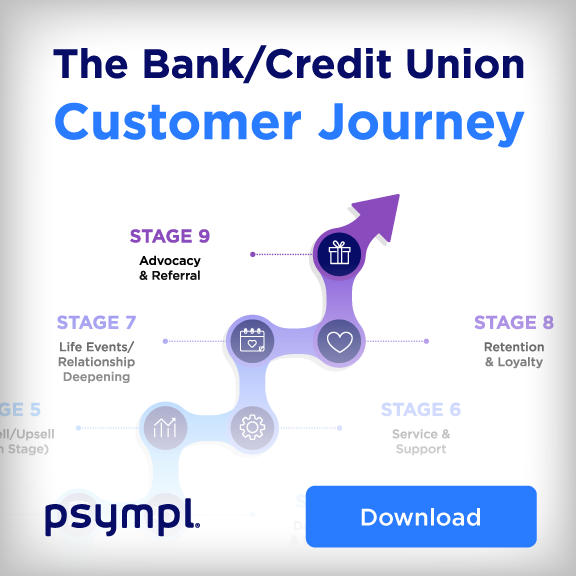
Download Psympl’s CX Guide for Banks and Credit Unions to learn how leading financial institutions are using psychographic insight to create a scalable personalization strategy in finance—without adding complexity or compromising trust.

Brent Walker
Table of contents